



The 5 Box Decluttering Method: A Simple System That Actually Works
Picture this, you walk into your kitchen, you notice how the counters are covered in small appliances, cooking utensils and snacks that you can't seem to find a place for. You open up a drawer and suddenly you're staring into the abyss of unused gadgets, you don't even remember there proper names or how to even use them.
You were promised products they were going to "make your life so much easier" even though you've probably only used them maybe once or twice since you bought them. We've all been there. You already know you need to get organized. You've been setting the thought on the back burner for months now.
And you think: "Where do I even start?."
The problem with most decluttering advice is that it tries to be fancy. One expert tells you to neatly fold all your clothes in a drawer in a very specific way. Someone else says the 80/20 rule. Another person swears by category-based sorting across your entire home. And while those methods might work for some people, for everyone else with a never-ending To-Do-List strapped to our back, we need simple solutions that work in a world that's demanding our attention 24/7.
You're brain needs a break and is begging you to use a system that works with your space, and your life...
Enter The 5 Box Decluttering Method
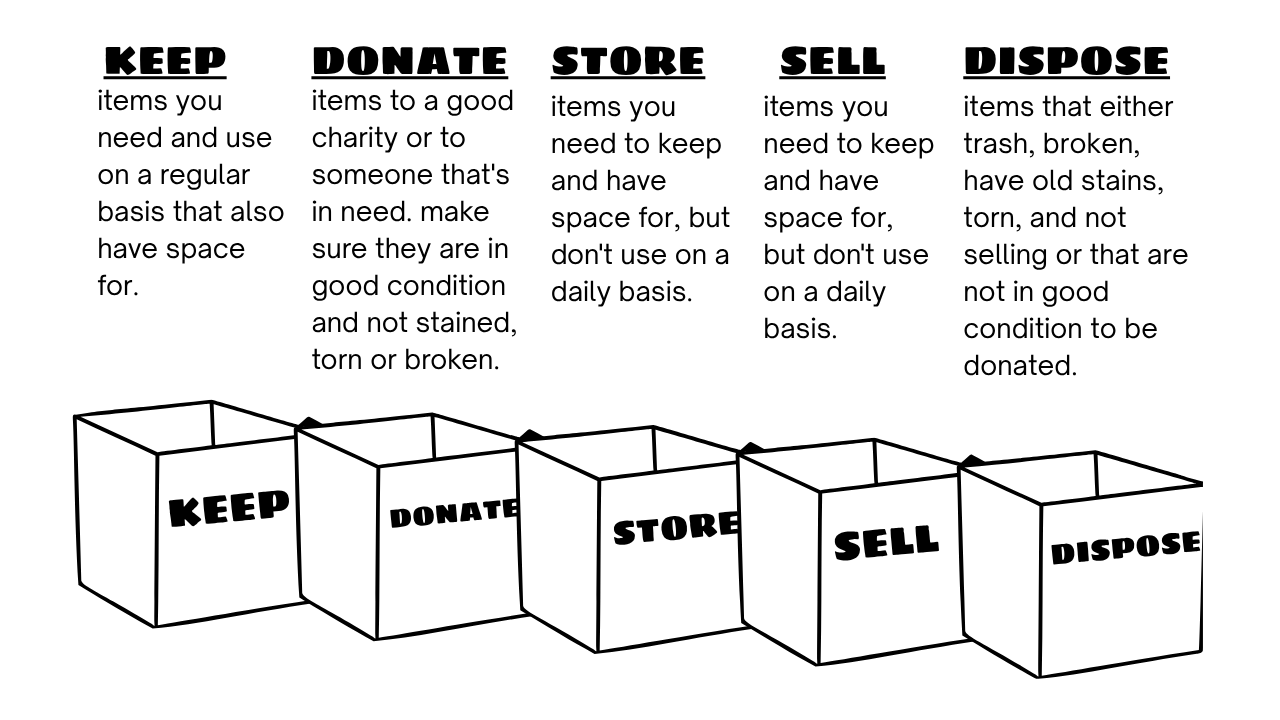
This isn't a weekend overhaul. This isn't about emptying your entire closet and sorting through hundreds of items at once. This is a straightforward, manageable approach that breaks decluttering into bite-sized pieces.
You pick ONE zone. You use five simple categories. You make decisions based on what actually matters to you.
And you don't have to buy anything new to get started.
What You Need: The 5 Boxes
Before you start, set up five boxes or bins. And here's the important part: use what you already have.
You don't need fancy storage bins from a home organization store. Check your closet for laundry baskets. Look for cardboard boxes from Amazon deliveries. Use what's sitting around your home.
If you do want to grab some budget-friendly plastic bins, dollar store options work perfectly. Just label them clearly so you know where everything goes.
Speaking of labels, grab a Sharpie marker and some peel-and-stick label holders. Write the name of each box clearly so there's no confusion as you sort.
Even better? I have printable sorting labels that match the 5 Box system, and they're included in my Free Starter Kit. Just print them out on sticker paper, (or standard paper with some tape) and stick them on your boxes (containers) and you're ready to go. No fancy label makers or extra supplies needed.
KEEP
Everyday items you use regularly like kitchen utensils.
Tools or small appliances you actively use around the house.
Clothing you actually wear and fits you well.
Sentimental items that genuinely hold alot of meaning to you that you're not keeping out of guilt.
DONATE
Clothes that are in decent condition that you've out grown or just don't wear anymore.
Books you've already read and won't read again.
Home decor items you no longer love or that don't match your style.
Items from hobbies or interests you've moved on from.
STORE
Seasonal clothing like winter coats and bathing suits.
Holiday decorations you use every year.
Yard decor you only use in the summer
Sports equipment or outdoor gear.
Important documents, photos, and keepsakes you want to preserve.
SELL
Clothes, shoes, or bags still in good condition.
Electronics that still work but you've upgraded from.
Furniture or home items you're replacing.
Brand new items you never used.
Collectibles or items that have resale value.
DISPOSE
Broken items that can't be repaired.
Clothing with stains, tears, or holes that are unfixable.
Expired products, makeup, or skincare items.
Old magazines, newspapers, and junk mail.
Items too damaged to donate or sell.
Step 1: Pick ONE Zone
This is crucial. Not your entire bedroom. Not your whole closet. One zone.
Your nightstand. One shelf. A single drawer. The area under your bed.
Why? Because overwhelming yourself defeats the purpose. You'll start strong, hit a wall, and quit.
One zone is manageable. One zone gives you a win. And wins whether big or small build momentum.
Step 2: Remove the Obvious Trash
Your first job is easy: find the actual trash.
Candy wrappers. Empty water bottles. Broken hair clips. Dead batteries. Anything that's clearly garbage.
Toss it in the DISPOSE box or directly into a trash bag. There's no strict rules here. Whatever works for you. The goal is just get rid of all the trash.
This step takes about 5-15 minutes and clears visible clutter immediately. After doing this one step, you'll already start feeling the difference in your space.
Step 3: Sort Everything Else
Now comes the real work. Pick up each item one at a time and ask yourself these five questions. You don't have to ask them in order. Just ask yourself the questions to help you clarify where each item belongs as you move through the decluttering process.
1. Do I use this regularly?
If yes, put it in the KEEP box/bin. If no, keep going.
2. Am I keeping this out of guilt or obligation?
This is the big one. If you are, your feelings are valid, but the doesn't mean you need to hold to something when you really rather let it go.
3. Would I buy this again?
If the answer is no, you don't really want it. Move on.
4. What purpose is this serving me?
Is it beautiful? Functional? Meaningful? Or is it just taking up space?
5. Do I have the space for this?
Even if you like it, do you actually have room for it? If you don't know, it's okay, you can just set it aside for now and come back to it later.
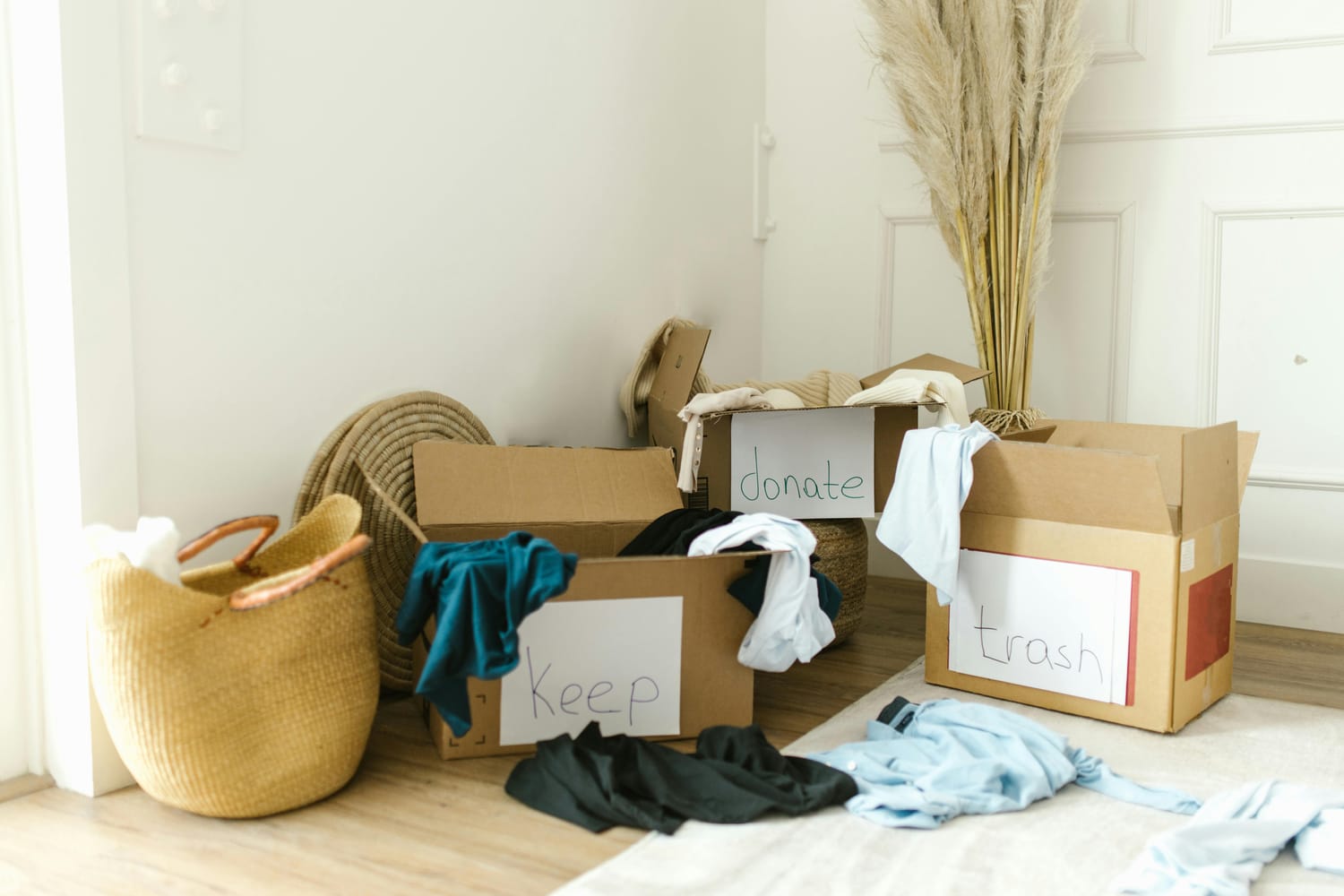
Start With What You Know
Go through your zone slowly. Start with items you know for sure you want to keep. Set those aside in the KEEP box. And contnue the sorting process.
Then move to items you're less certain about.
For things in decent condition you no longer want or have space for: Put them in the DONATE box.
For items you don't want anymore and think you could sell, put them in the SELL box.
For things you want to keep but don't use often:
Think seasonal decor, home maintenance tools, specialty equipment, ourdoor toys for the kids and more. Put these in the STORE box. (Pro tip: clear tote containers work great for seasonal storage. Or if clear containers aren't your cup of tea, you could also get opaque storage bins like this. You want some kind of large containers that can be stored in place like a basement, attic or a garage. They need to be durable and stackable to minimize space. Then you can label them, and you're done.
Note: That if you don't have any storage totes on hand or don't have the budget at the moment, just use what you have or can find.
For anything broken, stained, or beyond repair: toss it in the DISPOSE box
The Emotional Part: When It Gets Hard
If you've been following my content, you know that decluttering isn't just about stuff. It's about the feelings attached to the stuff.
Hand-me-downs from family. Expensive items you feel guilty about. Things you're keeping "just in case." Gifts that came with guilt attached.
These are real obstacles. And they deserve real answers.
Here's what I want you to know: You don't owe anyone the responsibility of keeping their stuff. Your home is not a storage unit for someone else's life.
When you're struggling with hand-me-downs or guilt gifts, go back to that question: "Am I keeping this out of guilt or obligation?"
If the answer is yes, let it go.
The person who gave it to you already moved on. They're not storing your old stuff in their house. You're allowed to do the same.
Keep the memories. Keep the things that actually mean something to you. And let go of the rest.
Letting Go of Expensive Things
You spent $100 on something. Or $200. Now you feel guilty getting rid of it.
Here's the truth: that money is already gone. Keeping the item won't bring it back. Feeling guilty about it won't change the past.
If you want to try selling it. then do that. But set a time limit. List it for a couple of months. If it doesn't sell, let it go.
You don't want to let items sit in your home for years because you're waiting for the "right" buyer. That's not decluttering. That's just moving the problem around.
The thing here to remember is that you can't look at every item you own as an opportunity for profit. Some things just need to leave.
The "What If" Items
"What if I need this someday?"
If it's a tool or a item you actually might use in the future? Keep it.
If it's something like a pair of pants that you've been meaning to repair for two years or more? Toss them.
If you're genuinely unsure? Keep it. Come back to it later.
But be honest with yourself about what "later" means. Don't use uncertainty as an excuse to keep everything.
Decluttering is not a One TIme Job
I hate to be the bearer of bad news, but decluttering isn't a one time thing. You can't just sort through your belongings, put what you decided to keep and store back where it was and not have to ever do it again. Even if you can get rid of 80% of your stuff. The key to having an organized home is have the right systems (that work for you) in place and maintaining them overtime. Let me say that again, once you declutter an area in your home and have a system in place, whether you're a visual organizer or a hidden organizer, YOU NEED TO MAINTAIN YOUR SYSTEMS. I'll go into more detail in upcoming article on the subject. But for now, grab your five boxes, pick a drawer or shelf or one zone in your home and commit to a small decluttering session. The system works. The key is actually using it.
Next, we'll dive into how your organizational style—whether you're a visual organizer or prefer everything hidden away, shapes the systems that actually work for you.
For More on the Psychology of Clutter
If you're struggling with letting go on a deeper level, I go into more detail about identity clutter, emotional attachments, and the psychology behind why we hold onto things in my first blog post: The Real Reason Your Home Gets Clutter (And It's Not What You Think.
You've Got This
The 5 Box Decluttering Method works because it's simple and it doesn't require you to upend your entire life.
One zone. Five boxes. Honest questions.
That's it.
You don't need to be perfect. You don't need to do it all at once. You just need to start.
Pick your zone. Set up your boxes. Ask yourself the hard questions.
And remember: this is your home. Your space. Your life.
Organize it accordingly.
Ready to get started? Grab your boxes and pick one zone today. You'll be surprised how much better you feel when that one space is clear.
And if you want a free printable version of how to get started to post on your wall or print for your family, grab my Free Starter Kit.
Ready to go deeper? Check out my eBook, The Art of Decluttering, for more strategies and methods that work for different brains and lifestyles.
YOU MIGHT ALSO LIKE
Created with ©systeme.io