



The REAL Reason Your Home Gets Cluttered (And It's Not What You Think)
You walk into your bedroom and sigh. That pile of clothes on the chair has been there for three days. The nightstand is a graveyard of water bottles, loose change, and things you swear you'll deal with "later." The closet seems to have become a portal to another dimensions of clothes you haven't wore since high school, mismatched socks and lost shoes that no longer have a "sole"mate. And we haven't even touched the junk drawer.
Here's the thing nobody tells you: you're not lazy. You're not a slob. You're not failing at basic adulting.
Your home didn't become a cluttered mess because you lack willpower or discipline. It happened because of reasons that are real, psychological, and valid. These reasons have nothing to do with your worth as a person or your ability to keep your life together.
The problem is, most organizing advice treats clutter like a moral failing. "Just get disciplined," they say. "Declutter in one weekend," they promise. "Follow my system and you'll never have to organize again." But that's not how clutter actually works. And that's definitely not how you work.
Clutter isn't the enemy. It's a symptom. And once you understand what's actually causing the mess, you can finally do something about it in a way that actually sticks.
1. Decision Fatigue:
Your brain makes thousands of decisions every single day: what to wear, what to eat, what to say in that email. By the time you get home, your decision-making muscle is exhausted.
So when you look at that item on your floor and think, "Where should this go?" your brain literally doesn't have the energy to decide. In fact, it's easier to just leave it there and tell yourself that you'll put it away tomorrow.
This is decision fatigue, and it's one of the biggest culprits behind clutter accumulation.
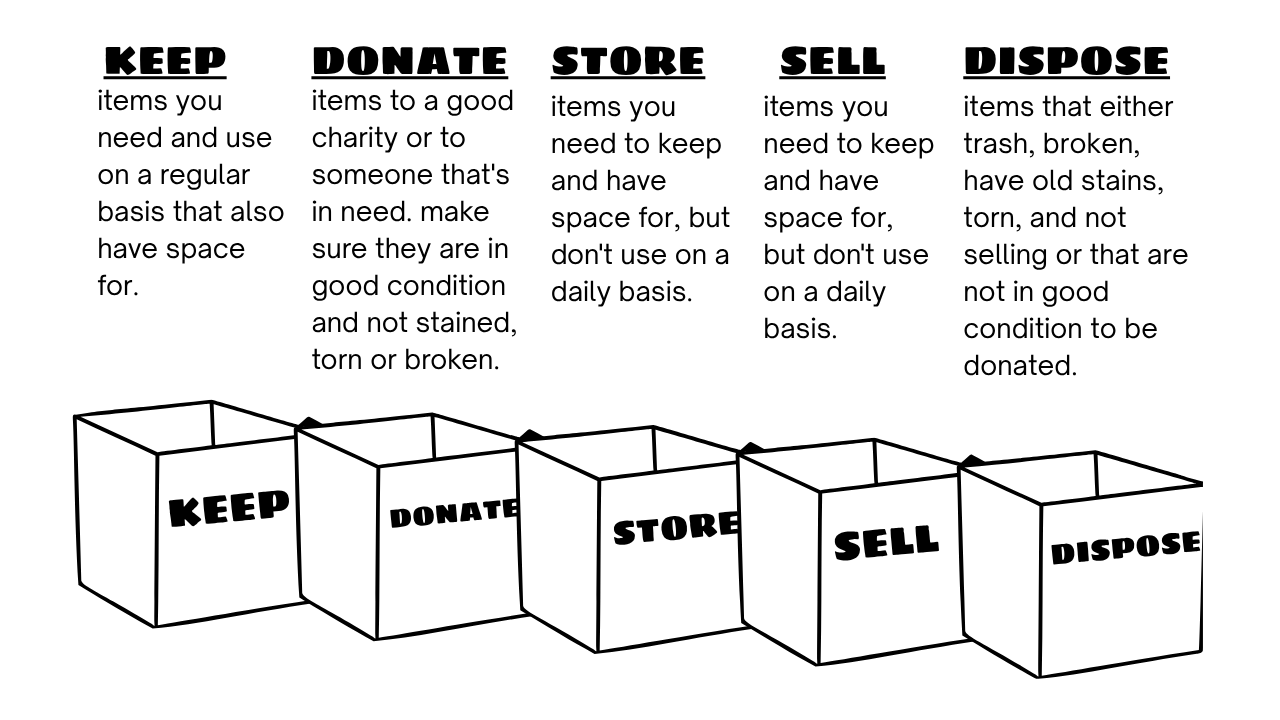
Every object in your home is a mini-decision waiting to happen: Keep it? Donate it? Sell it? Where does it belong? When you're already mentally drained, these tiny decisions pile up into visual chaos.
2. Scarcity Mindset:
You keep things "just in case you'll need later." Just in case you need that broken vacuum cleaner (because maybe you'll get it fixed one day?). Just in case those jeans fit again. Just in case your son or daughter might miss those toys that they have played with for five years.
A scarcity mindset tells you that if you get rid of something, you'll need it tomorrow and regret it sometime in the future. So you hold onto everything because "what if"?
The truth? That "what if" is costing you peace of mind in the present.
3. Procrastination
"I'll deal with it later."
Later becomes next week. Next week becomes next month. And suddenly, you've got a mountain of "later" items taking up space in your home and mental energy.
Procrastination feeds clutter because every undone task becomes a physical reminder of something you're avoiding. Clothes that need to be folded. Things that need to be returned. Items sitting in the corner waiting for their "proper home."
Each one is a small weight on your shoulders.
4. Wrong System (or lack of one)
Here's a hard truth: a system that works for someone else's brain won't work for yours.
Maybe your friend swears by color-coded labels and a rigid filing system. And might be a great system for her. But if that's not how your brain works, you're not going to maintain it long-term. You'll feel like you're failing when really, the it was just the wrong system for you to begin with.
Without the right system designed for you, the one that actually fits how you think and live, clutter wins. Because there's nowhere for things to go, so they pile up in "temporary" spots and those "temporary" spots gradually become permanent over time.
5. Idenity Clutter
This is the stuff you keep because of who you used to be or who you think you should be.
The guitar in the corner because you used to play but haven't touched it for over a decade. Piles of unopened scrapbooking kits that you because you told yourself you needed a new hobby but never got around to it" The fancy kitchen gadgets that you were promised would make your life easier.
You're keeping these items as evidence of an identity that doesn't actually fit your life right now. And they take up space, both physical and emotional, because they represent a fantasy version of you or the person you used to be, not the person you are now.
6. Emotional Attachment
That fine china set sitting in a cabinet collecting dust that your grandmother gave you that you're afraid to even touch. A wardrobe of baby clothes that you're kids already grew out of . Earrings your aunt bought you that you never wear because they're not your style.
Objects hold memories. And memories hold emotions. So letting go of the object feels like letting go of the memory, the person, the moment. It can almost feel like rejection.
Clutter happens when you're holding onto things to hold onto feelings. And when everything in your home represents something emotional, letting anything go feels impossible.
7. Overconsumption
You bought it with good intentions. A new hobby that lasted two weeks. A shirt that looked perfect in the store but never leaves the back of the closet. That hot new exercise gadget going viral on social media that promises you instant results within two weeks. There always seems to some "life-changing" product on the market, but let's be real, it usually never is.
Overconsumption is sneaky because it feels intentional while it's happening. And with all the influencers out there screaming to you that you NEED this thing, and then your life will be fulfilled. Then, you buy the thing that you really didn't need or want it the first place, and the items pile up faster than you can use them, organize them, or even remember you have them.
Don't buy the lie! You don't need something just because some big social media personality has it. You are your own person, you know what you need for you're life and truth be told, if you're always following what's trending, it will be out within a couple weeks or so.
Otherwise, you'll end up with more than you could ever actually use, wear, or need. And that surplus accumulates into clutter.
8. Mental Overload
Sometimes your brain is just... full.
You're stressed about work. You've got relationship stuff going on. You're worried about money or health or a hundred other things. Your mental capacity is maxed out.
When you're mentally overloaded, the executive function tasks like organizing, making decisions about objects, and maintaining systems don't get done. Your brain is too busy dealing with the chaos inside your head to deal with the chaos going on in your home.
So clutter easily piles up while you're just trying to survive.
9. Unfinished Business
That project you started and abandoned. The clothes that need hemming. The book you're in the middle of reading. The box of stuff you've been meaning to sort through "sometime."
Unfinished business takes up space. Physically, yes, but also mentally. Every incomplete task is a loop in your brain that doesn't close, creating background anxiety and visual reminders of failure.
So the mountain of unfinished items grows, and your clutter grows with it.
The Real Truth About Your Clutter
Look at that list. Nine reasons. How many of them apply to your life right now?
If you're honest, probably all of them. At least a little bit.
And here's what I want you to hear: None of these reasons mean you're broken or lazy or destined to live in chaos.
They mean you're human. You get tired. You have emotions. Your brain works a certain way. You've got a lot going on.
The clutter accumulated because of real reasons, not character flaws.
Which means the solution isn't to "just get organized" or "be more disciplined." The solution is to understand what's actually causing the clutter and address it in a way that works for YOUR brain, YOUR life, and YOUR situation.
That's where real change happens. Not in a weekend. Not with someone else's system. But slowly, steadily, in a way that actually sticks because it's built for you.
The fact that you're reading this? That you're asking "why is my home cluttered?" instead of just accepting it.
That's the first step. And you're already taking it.
Look at that list. Nine reasons. How many of them apply to your life right now?
If you're honest, probably all of them. At least a little bit.
And here's what I want you to hear: None of these reasons mean you're broken or lazy or destined to live in chaos.
They mean you're human. You get tired. You have emotions. Your brain works a certain way. You've got a lot going on.
The clutter accumulated because of real reasons, not character flaws.
Which means the solution isn't to "just get organized" or "be more disciplined." The solution is to understand what's actually causing the clutter and address it in a way that works for YOUR brain, YOUR life, and YOUR situation.
That's where real change happens. Not in a weekend. Not with someone else's system. But slowly, steadily, in a way that actually sticks because it's built for you.
The fact that you're reading this? That you're asking "why is my home cluttered?" instead of just accepting it?
That's the first step. And you're already taking it.
Ready to understand your clutter instead of just living with it? That's where transformation begins.
YOU MIGHT ALSO LIKE
Created with ©systeme.io